Organic Management for Squash and Cucumber Pests; That Actually Works
You have a beautiful squash plant thriving in your garden.
Perhaps it’s a lovely golden zucchini plant and it’s just starting to produce adorable yellow squash, you can’t wait to throw them on the grill!
Or maybe it’s your favorite winter squash and you are dreaming of roasting it and drizzling it with maple syrup on a cold winter day...
But one day you walk out to your garden with your morning cup of coffee and BAM, the entire plant is just dead. AHHHHHH!!!!!
That is the work of a Squash. Vine. Borer. UGH!
You may also have Squash Bugs (they look like the more commonly known stink bugs) or cucumber beetles (little yellow striped or spotted bugs) that eat away at your squash and cucumbers and can often destroy a small plant in a short time...
I feel your pain!
It can make you want to kill every single bug in sight... (I’ve been there) BUT. Wait. There is a solution!
And let me say this right here, healthy gardens should have bugs (more on that later)...
But how exactly do you deal with these frustrating pests?
Three tiers of squash and cucumber pest defense in an organic garden ⬇️
I use all three methods in my own garden and have ACTUALLY watched them work! If you want to learn more about my garden methods, how you can visit my garden in person and so many more fun things, be sure you join my email list by clicking here. I’d love to be able to email you!
Insect netting row covers are highly effective against Squash Vine Borers, Cucumber Beetles and Squash Bugs. The key is to place the row covers over the plants as soon as you plant them. If you wait until you see pests it’s too late. This is a preventive measure.
For veggies that require pollination, remove the row covers when the plants start to bloom, or hand pollinate the plants.
For Cucumber Beetles and Squash bugs I typically find that removing the row cover when the plant is blooming as given the plant enough of a ‘headstart’ that they do fine once uncovered.
For Squash Vine Borers, which can be a problem at any stage of growth, consider hand pollination or only removing the row covers for a short period to allow pollinators to access the blooms. During this time, check for signs of adult Squash Vine Borers and keep the row covers on if there are any signs of this pest.
Hand picking pests. Not fun. Not fast. But the amount of bugs you can hand pick off and the satisfaction of squashing them, all in less time than it takes to drink your cup of coffee, is incredibly effective as long as you are consistent.
Be sure to check the undersides of leaves and learn to identify the pests in all stages of their life cycle.
Personally, I prefer to do this task while wearing gloves.
Encouraging beneficial bugs that eat these pests by planting a wide range of annual and perennial flowers such as Sweet Alyssum, Marigolds, Zinnias, Cosmos, Echinacea, Dill, and many more.
Many beneficial insects need nectar and pollen from flowers to survive. Once they are attracted by the flowers, they help by feeding on pests
I also allow a small area near my garden to ‘go wild.’ It is planted with a mix of flowers and I leave all the plant material in this area all winter to provide a place for the good bugs to overwinter.
The goal isn't to eliminate every bug —it's to create a balanced ecosystem where beneficial insects keep pest populations under control so you get to eat your veggies and enjoy flowers too!
These methods also work against many other common garden pests.
For the best results, use all three methods in your garden!
What have you found to be most effective in your organic garden?
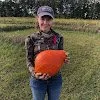
Pictured: 5 year old Me with a massive squash harvest for my pretend farm store!